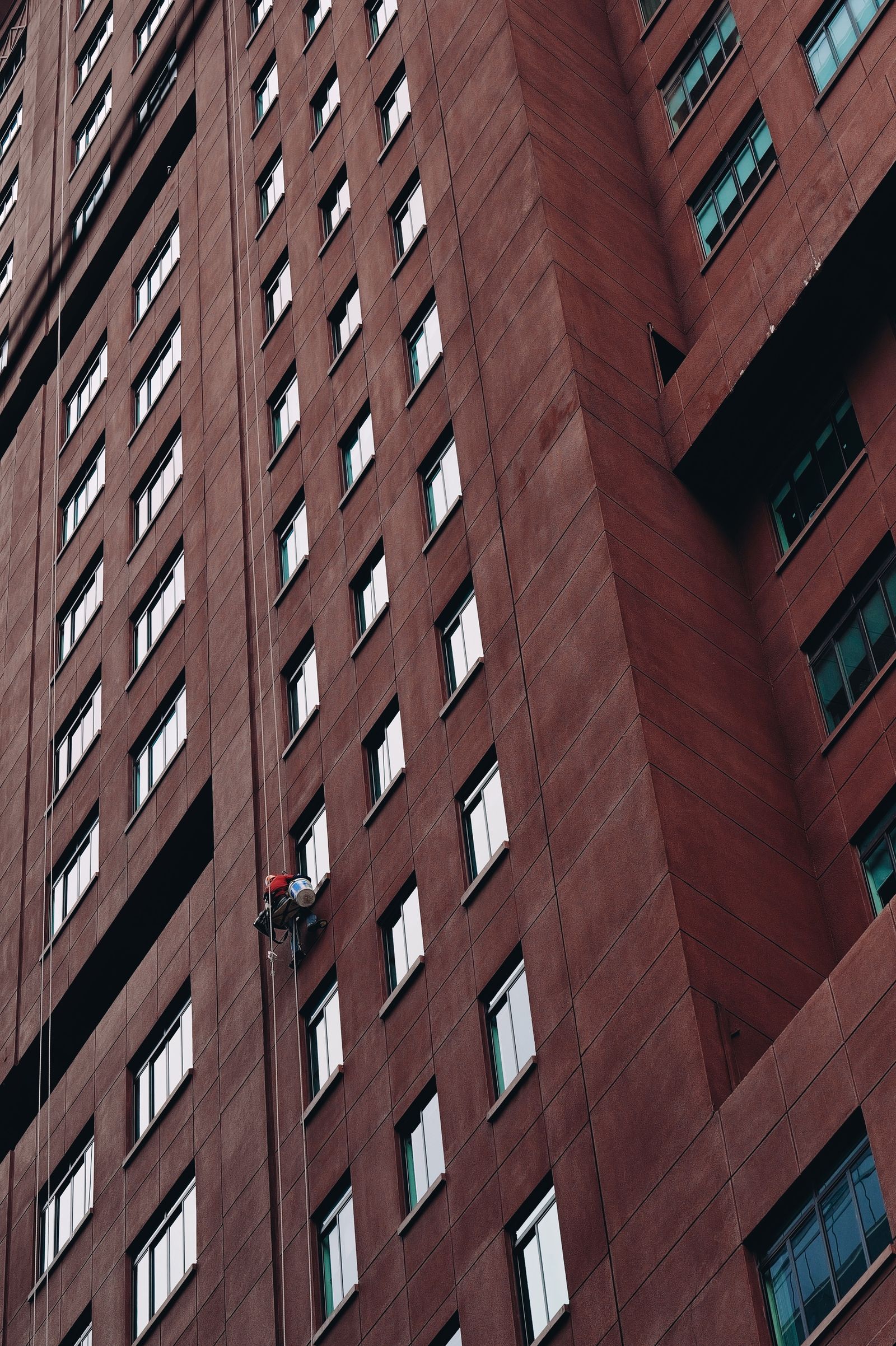
A drone wins when reach is broad but ground space is scarce
Aerial cleaning can have a practical advantage when the target is a large, compatible surface above an area where a lift would consume critical space or require frequent repositioning. Examples might include an upper glass band over a private setback, portions of a broad facade above a controlled campus area, or elevations where a machine's boom geometry cannot reach efficiently from the available setup point. The drone remains connected to a ground operation: it needs a launch and recovery area, a trained operating team, water delivery, clear command visibility, and control of people and property below. Its advantage is not the absence of ground logistics but the possibility of a smaller or differently located ground footprint.
That distinction matters in New York City. A building may depend on a narrow loading schedule, continuous residential access, a hotel arrival lane, or a plaza shared by several tenants. A lift can block turning movement or require setup on surfaces that have not been confirmed to carry it. In a suitable work zone, remote application may preserve more of the site's normal circulation and reduce the need to move heavy equipment from drop to drop. The comparison should be made with a site drawing and operating schedule, not an assumption that a drone is automatically compact. Hoses, water equipment, barriers, observers, and safe separation still occupy space, and the proposed arrangement may remain impractical on a crowded sidewalk.
- Compare the complete ground footprint for both methods.
- Check lift dimensions, loads, reach, setup points, and repositioning.
- Check drone launch, recovery, visibility, hose routing, and controlled area.
- Preserve required building access and emergency routes in either plan.
A lift wins when the finish depends on contact and dwell time
Many facade-cleaning results are created by physical contact. A technician may need to agitate corners, detail mullions, squeegee glass, inspect the surface at arm's length, treat individual deposits, or control chemistry over a small area. Lift access can support those tasks when the machine can be placed and operated appropriately. A drone is generally better understood as a remote application and rinsing platform. It can distribute water or a compatible cleaning solution under a defined process, but it should not be expected to reproduce every hand-cleaning action. When the success criterion is close-detail clarity at each pane, direct access may be the more predictable choice.
Soiling should be characterized before access is selected. Loose dust, pollen, light atmospheric film, and some water-soluble residue may respond to a rinse process. Mineral scale, construction debris, paint, silicone, oily deposits, biological growth rooted in porous material, and stains caused by corrosion can require testing or specialty treatment. Some visible differences are damage or weathering rather than soil. If a trial shows that remote rinsing leaves the condition substantially unchanged, the answer is not necessarily more pressure or stronger chemistry. It may be contact cleaning, restoration, a material consultant, or acceptance that the mark is outside a cleaning scope. A lift beats a drone when it enables the method the material actually needs.
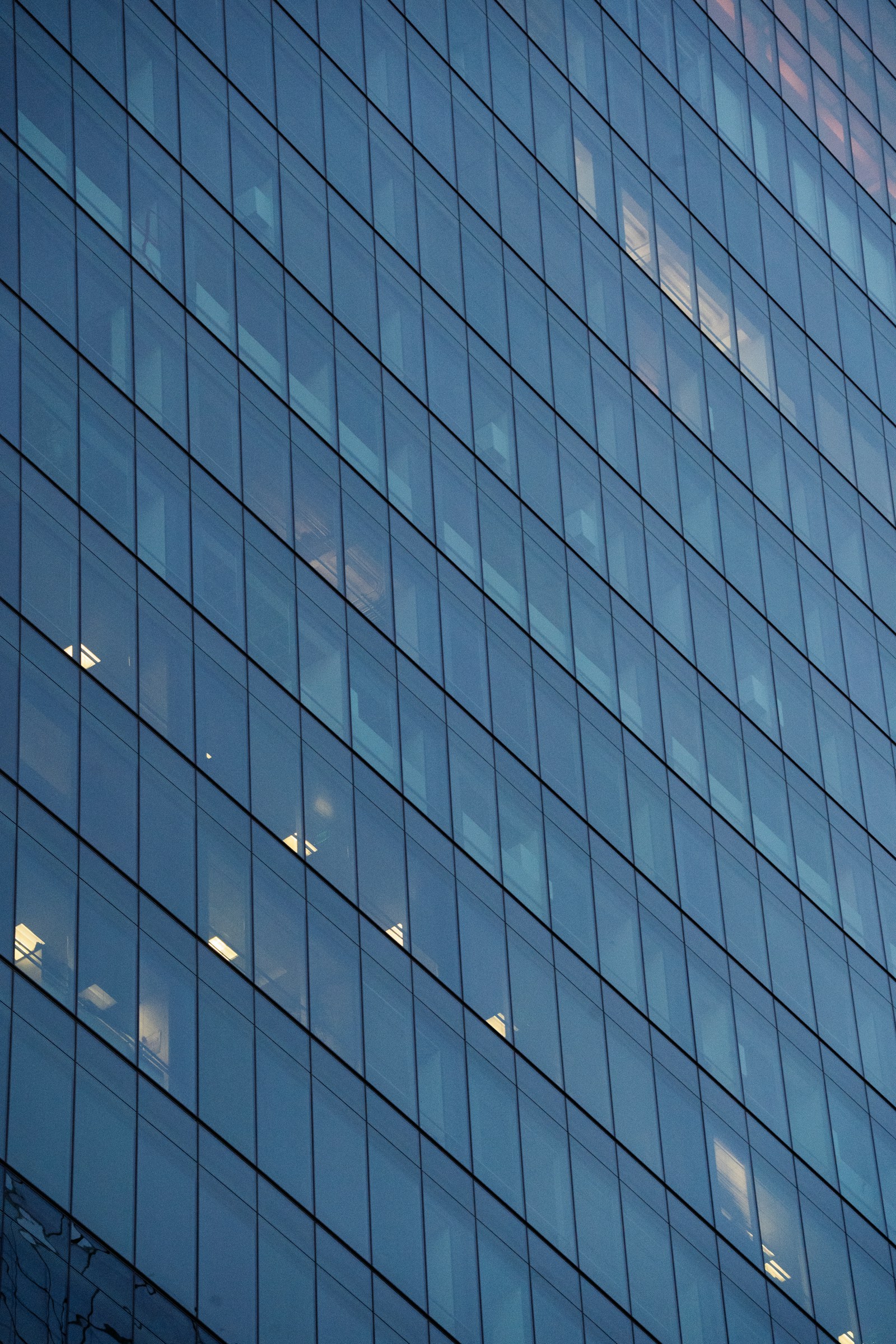
Facade geometry can reverse the decision from one side to another
Simple elevation drawings rarely reveal all the obstacles that influence access. Deep reveals, projecting fins, balconies, terraces, canopies, signage, irregular setbacks, open mechanical floors, rooftop screens, and suspended equipment can interrupt spray paths and visibility. Recessed glass may be shielded from a useful application angle. A drone may perform efficiently on one broad face but leave shadowed areas that require another method. Conversely, a lift that easily reaches lower bays may not have a suitable setup position or boom path for an upper setback. A hybrid plan can be more credible than forcing one tool across the whole exterior.
New York's boroughs contain varied building forms, and broad local labels do not settle the geometry. Manhattan includes towers on tight lots as well as campuses and plazas. Brooklyn and Queens combine converted industrial buildings, new residential towers, institutional properties, and dense main streets. The Bronx has residential complexes, schools, hospitals, warehouses, and office properties with very different perimeters. Staten Island includes lower-density sites and commercial buildings where terrain, landscaping, parking circulation, or utilities can still constrain setup. NYC Department of City Planning community-district information is useful for locating a property within the city's planning geography and understanding surrounding context. It is not an access approval, an aviation determination, or evidence that every building in a district can use the same cleaning method.
Weather control often decides the winner on the work date
Wind around buildings is three-dimensional. It can accelerate along a facade, rise at a corner, spill over a roof, and change with elevation. Remote spray that is controlled during one pass may drift when the direction shifts. Aerial operations also depend on maintaining stable control of the aircraft and delivery system. A lift may provide closer placement and shielding in some conditions, but lifts also have manufacturer limits and can become unsuitable in wind or other weather. Both methods need documented limits and a real-time stop decision. A schedule should allow the team to postpone rather than push through conditions that defeat control.
Temperature, precipitation, and drying behavior matter as well. Water on a pedestrian surface can create a slip hazard and becomes a more serious problem near freezing. Rapid drying can expose spotting or shorten chemistry dwell time. Rain can make a rinse unnecessary, interfere with the intended process, or create uncontrolled runoff. Strong sun may heat some materials unevenly. The most credible comparison asks which method can operate within a conservative weather window and still produce the agreed finish. In some seasons or at some elevations, the answer may be neither method on the requested date.
- Evaluate conditions at elevation, not only at street level.
- Define wind, temperature, precipitation, and visibility limits.
- Include a pause and rescheduling process in the operating plan.
- Recheck drift and drying during representative test work.
Public interfaces and neighboring uses belong in the comparison
A New York work zone can border apartment entrances, storefronts, schools, transit access, delivery lanes, outdoor seating, bicycle routes, and neighboring roofs within a short distance. A lift may require a larger barricaded setup area and protected boom path. A drone operation may require separation around launch and recovery, observers, hose management, and a larger drift-conscious buffer than the machine's footprint suggests. Water cannot be allowed to surprise pedestrians, enter open windows, coat vehicles, reach electrical equipment, or cross casually onto adjacent property. The better method is the one whose full hazard controls fit the site without relying on people to behave contrary to normal use.
Scheduling can improve either option. Building management may close a private courtyard for a defined period, shift deliveries, station staff at doors, notify occupants, coordinate with retail tenants, or isolate a setback. These controls should be specific and realistic. A public sidewalk is not equivalent to a private work yard, and ordinary cones are not a universal answer. Proposed street or sidewalk use, equipment placement, aviation activity, and temporary controls must be reviewed for applicable permissions and authority requirements. Existing sidewalk sheds, fences, or netting may be required public protection and cannot simply be moved, repurposed, or counted as the cleaning contractor's control boundary.
Facade safety obligations sit outside the drone-versus-lift choice
NYC Department of Buildings states that owners of properties higher than six stories must arrange an exterior-wall and appurtenance inspection every five years and file a technical facade report. The Department also explains that these critical examinations may only be performed by a QEWI. Whether cleaning is performed by drone, lift, suspended scaffold, water-fed pole, or another method does not change that obligation. Cleaning personnel may observe and document a surface condition, but they do not perform the mandated examination, diagnose structural performance, classify the facade, or make the required filing through a cleaning scope.
This boundary should be written into planning documents. Drone cleaning and lift-based washing are maintenance services, not FISP inspection or repair, QEWI work, or substitutes for required public protection. If loose material, cracked glazing, displaced facade components, open joints, spalling, or another potentially unsafe condition is reported or observed, cleaning should pause and the matter should go to the building's QEWI or other appropriate qualified professional. A required shed, fence, structural netting, or other measure remains in place and under the relevant professional and regulatory direction. Choosing an access method cannot be used to work around a restriction or defer a safety response.
Compare total disruption and result, not a single line item
A useful comparison includes mobilization, equipment delivery, setup duration, protected area, operator and support staffing, water logistics, repositioning, likely production by elevation, tenant coordination, restoration of the ground area, and the expected cleaning result. A lift may have more visible mobilization but deliver contact work in one pass. A drone may reduce machine movement while requiring a separate detail-cleaning step. Either method can become inefficient when work windows are short or when repeated interruptions break the planned sequence. Because site conditions and commercial proposals vary, a general article cannot responsibly declare a fixed price or savings percentage.
Property teams can ask bidders to state assumptions in the same format. Each option should identify included elevations, excluded materials, access and water responsibilities, weather limits, expected finish, test-area procedure, public-interface controls, documentation, and the conditions that would trigger a change in method. This makes differences visible before work starts. It also supports a hybrid decision: remote rinsing for broad compatible upper fields, direct access for detailed lower glass, and specialty treatment only where testing supports it. The best outcome is not loyalty to a machine. It is a scope that matches the building while preserving the authority to stop when the premise no longer holds.