
Define the finish before choosing the access method
The phrase glass rinsing can describe several different expectations. A maintenance rinse may remove loose dust and reduce a film left by ordinary urban exposure. It does not necessarily deliver the close-detail finish associated with hand agitation, squeegee work, scraper use, mineral-deposit treatment, sealant cleanup, or restoration. Dried construction residue, hard-water scale, oxidation from nearby metals, silicone transfer, paint, and deposits embedded along gaskets can remain after a rinse. Those conditions may require testing and a different process. Property teams should identify whether the goal is general presentation from normal viewing distance, a recurring maintenance pass between periodic contact cleanings, preparation for a more detailed service, or treatment of a specific elevation after unusual exposure.
A practical scope uses observable acceptance criteria rather than a vague promise of spotless glass. It can name the elevations included, exclusions such as operable windows or damaged panels, the intended water quality, whether frames and spandrel areas are in scope, and how representative areas will be reviewed after drying. A test area is especially useful when the glazing has a coating, an unknown maintenance history, or deposits that may react differently across the facade. The result of that test may support a broader rinse, point to contact cleaning, or show that the visible condition is not removable soil at all. Choosing the access method after this definition protects the building from an impressive operation that does not answer the actual maintenance need.
- Identify elevations, panel types, frames, and exclusions.
- Distinguish loose soil from bonded deposits or damaged materials.
- Agree on an appearance standard that can be evaluated after drying.
- Use a representative test area when material or result is uncertain.
Read each New York City elevation as a separate work zone
One address can contain several operating environments. A tower may have an open upper elevation exposed to stronger wind, a setback with limited sight lines, a narrow rear lot line, a loading side with scheduled deliveries, and a street face over continuous pedestrian traffic. Mechanical equipment, antennas, balconies, signage, scaffolding, sidewalk sheds, setbacks, and neighboring roofs can interrupt flight or spray paths. Even where a drone can physically reach the glass, the crew still needs a suitable launch and recovery area, clear command visibility, controlled ground space, and a way to prevent wash water from reaching people, open windows, air intakes, vehicles, merchandise, or adjoining property.
The five boroughs add useful context but not a shortcut to approval. Manhattan density can constrain ground control and increase coordination with building operations. Brooklyn and Queens include everything from tight mixed-use blocks to broader industrial and waterfront sites. The Bronx includes large residential campuses, institutional properties, and commercial corridors with distinct access patterns. Staten Island may offer more open sites in some areas, while other properties still have traffic, terrain, utility, or neighbor constraints. NYC Department of City Planning community-district data can help organize local geography and stakeholder context, but district boundaries do not determine whether a particular facade is serviceable. The decision remains tied to the actual parcel, elevation, surrounding uses, and conditions on the proposed work date.
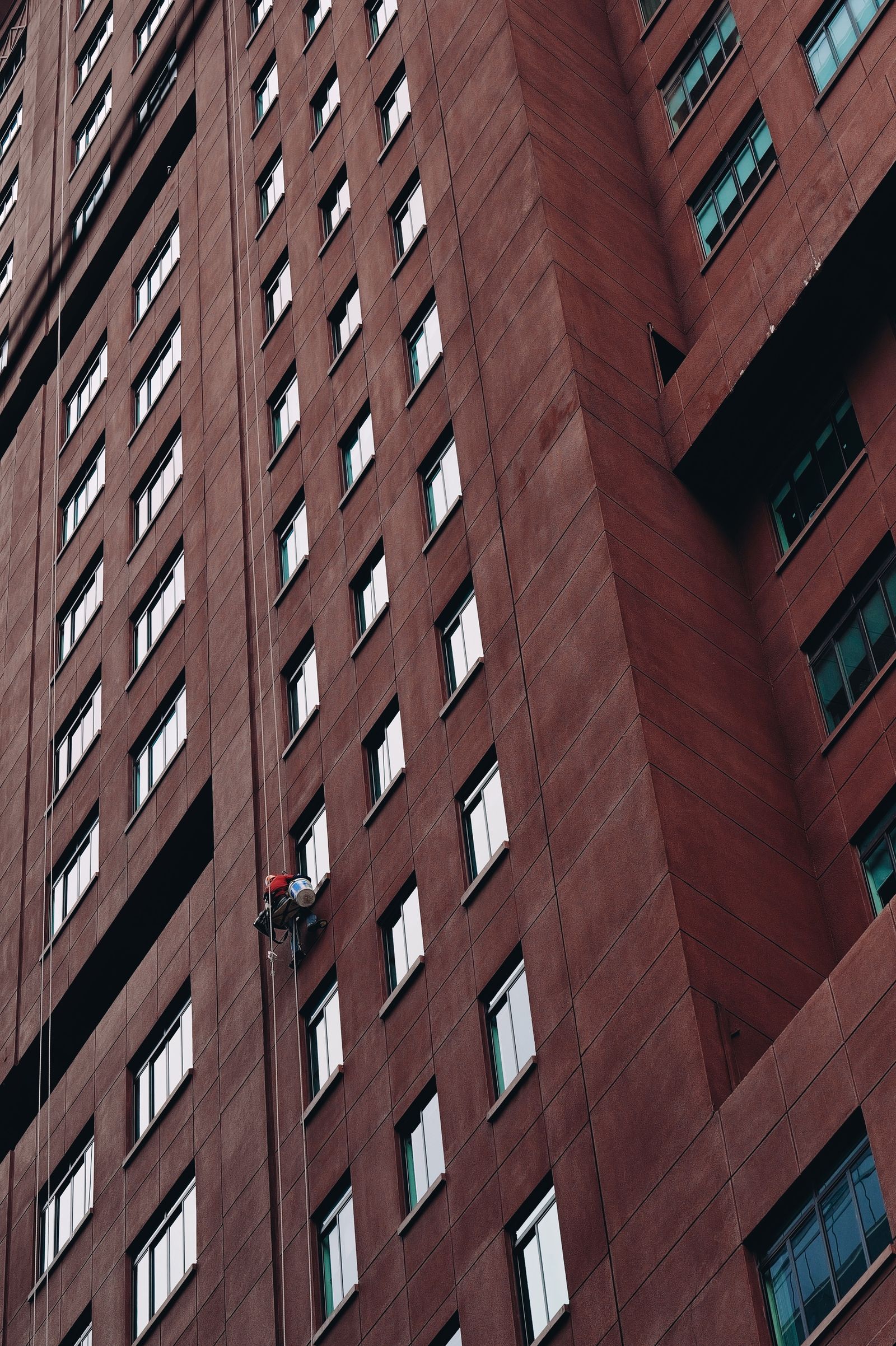
Build the plan around wind, drift, water, and runoff
Water applied at height can travel beyond the target when wind changes around corners, accelerates between towers, or spills over setbacks. Conditions observed at the sidewalk may not describe conditions higher on the building. A conservative plan establishes operating limits, monitors weather and local facade behavior, and gives the crew authority to pause when control is reduced. The plan should account for doors, transit entrances, loading zones, terraces, outdoor dining, neighboring windows, rooftop activity, facade openings, and sensitive equipment. A work window that looks quiet on a calendar can become unsuitable when deliveries, school movement, an event, or a shift in wind changes the ground environment.
Water source and water quality also shape the finish. Untreated water can leave spotting depending on its mineral content and the way droplets dry. A purified-water approach may improve results on compatible glazing, but it does not erase bonded contamination or guarantee spot-free drying under every condition. Hose routing, tank placement if used, backflow considerations, interior connections, and the available flow should be confirmed before mobilization. Runoff needs an intentional route. Crews should identify drains, low points, landscaping, entrances, electrical equipment, and areas where water could freeze in cold weather or create a slip condition. Cleaning chemistry, if any is proposed, requires a separate compatibility and containment review rather than an assumption that a product suitable elsewhere is suitable on a New York facade.
- Confirm water access, quality, volume, and hose or tank logistics.
- Map doors, air intakes, drains, public routes, and neighboring exposures.
- Set weather limits and clear pause criteria before work starts.
- Plan for runoff control and a dry, safe handback of ground areas.
Coordinate with occupants, vendors, and public-facing operations
High-access glass rinsing is easier to control when the building controls the interfaces around it. Property management may need to notify tenants, confirm that operable windows will remain closed, coordinate with security, reserve a loading or staging area, and protect sensitive entrances. Engineering staff can flag facade leaks, recent sealant work, intake locations, roof restrictions, or building systems that should not be exposed to water. Retail tenants may need time to move sidewalk displays, and loading personnel may need an alternate route. These steps are ordinary operational planning, but on a dense New York block they often determine whether the selected work zone can be established at all.
Other contractors matter too. Window cleaners, scaffold crews, facade consultants, construction managers, sign vendors, roofers, and mechanical contractors may use overlapping areas or create hazards above and below the work. The glass-rinsing scope should be sequenced rather than layered into an active facade operation without review. Existing sidewalk sheds, fences, or netting are not simply convenient barriers; they may be part of a regulated public-protection arrangement and must not be altered or treated as permission for cleaning. Any required permits, aviation authorizations, property permissions, street or sidewalk controls, or coordination with authorities must be identified for the proposed method and site. A service inquiry alone does not establish that those requirements have been satisfied.
Keep cleaning separate from FISP compliance and facade repair
The New York City Department of Buildings explains that owners of buildings higher than six stories must have exterior walls and appurtenances inspected every five years and file a technical report. DOB also states that the required critical examination may only be performed by a QEWI. A cleaning crew can document visible surface conditions encountered during its work and can stop when something appears abnormal, but it does not classify a facade as Safe, SWARMP, or Unsafe. Rinsing cannot certify structural integrity, determine code compliance, complete a mandated examination, or close a filing obligation.
The distinction is operational as well as legal. If cracked glass, loose components, displaced caps, open joints, spalling, unstable appurtenances, or unexplained water entry is known or suspected, the property team should involve its QEWI or another appropriate licensed design professional as required. Cleaning is not FISP inspection or repair, QEWI work, or a substitute for required public protection such as a sidewalk shed, fence, or structural netting when ordered or otherwise required. It should not obscure, disturb, or delay attention to a potentially unsafe condition. Where a qualified professional has established restrictions, repair sequencing, or protective measures, the cleaning plan must respect those controls and may need to wait until the building is released for compatible maintenance.
Use documentation to make a maintenance rinse repeatable
A useful closeout records what was actually treated, not merely what appeared on an initial wish list. Elevation notes, representative before-and-after photographs, start and stop conditions, water approach, exclusions, interruptions, and remaining deposits help a property team interpret the result. Documentation should avoid diagnostic claims outside the cleaner's role. A photo showing a mark that remained after rinsing is evidence of a remaining condition, not proof of the material, cause, or repair. When the condition could involve the facade assembly rather than surface soil, it should be routed to the appropriate building professional.
The first service can also inform maintenance cadence. Some street-facing glass accumulates traffic film faster than a protected courtyard elevation. Waterfront exposure may increase salt residue, while ongoing construction nearby may create short-term dust. A recurring schedule should reflect observed resoiling, tenant expectations, seasonal conditions, and the performance of the chosen method. It should not be sold as a fixed citywide formula. Periodic rinsing may extend the interval between more intensive contact cleanings for some properties; others may find that their glass, geometry, or required finish makes another access method more dependable. The honest outcome of planning can be a drone rinse, a hybrid scope, a conventional method, postponement, or a decision that the facade is not suitable.